Infrared Drone Roof Inspection

Look Beyond The Surface

What is an Infrared Drone Roof Inspection?

An infrared roof inspection is a non invasive process to inspect a roof by detecting temperature variations on the surface of the roof. We use infrared cameras to find areas of moisture accumulation, insulation deficiencies and other hidden problems. Infrared roof inspections, also known as thermographic roof inspections or thermal roof scans, gives a detailed view of the roof condition, things that are not visible to the naked eye.

By capturing thermal images, these inspections helps to pinpoint issues that if left unaddressed can cause significant damage, to ensure the longevity and integrity of the roof system. It allows for quick and efficient scanning of large areas and helps to find moisture and heat loss issues. Infrared imaging is a valuable tool for building owners and property managers to prevent damage and support maintenance decisions.

Certification badge for infrared thermographer, Craig Holland, issued by Infrared Training Center, completed on March 22, 2024, and expiring on March 23, 2029, with a background photo of a person giving a presentation to a group.

Certified Infrared Roof Inspection and Drone Moisture Survey with Thermal Imaging

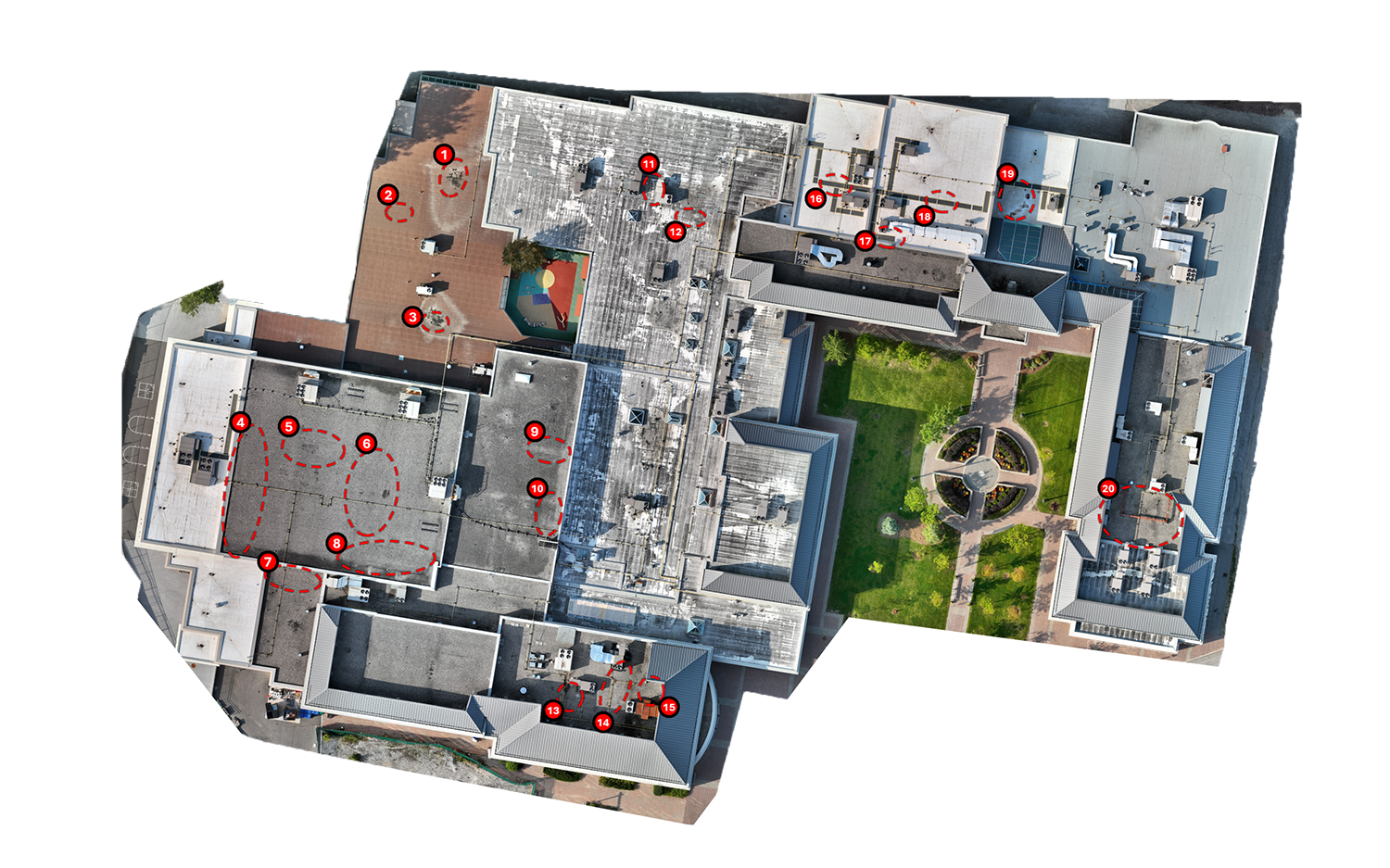
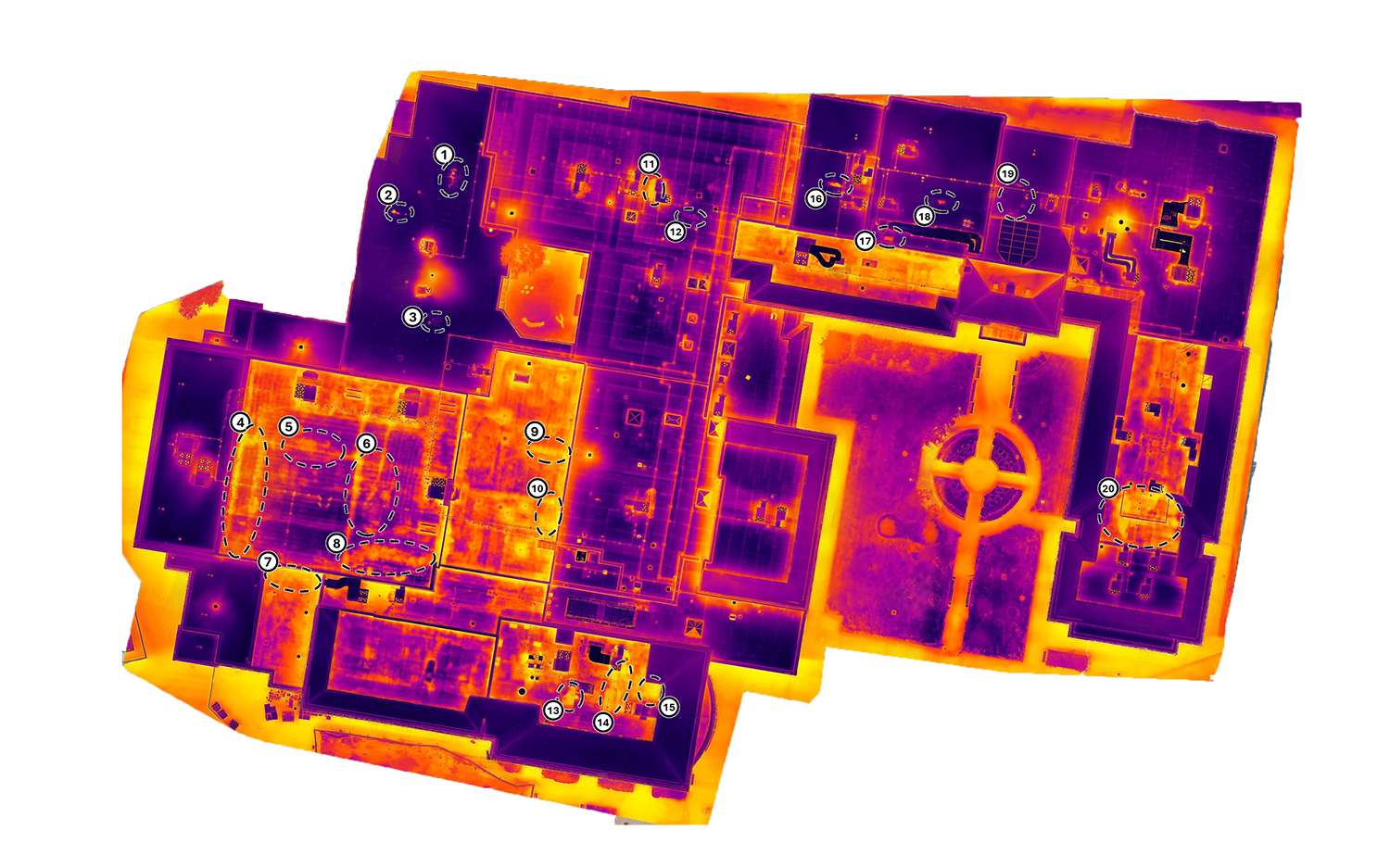
Our thermal trained and certified team uses drones (sUAS) with both RGB and infrared sensors to do infrared roof inspections and moisture detection on flat roofs. Unlike random roof images, our infrared scanning process maps the entire roof, captures thousands of images and processes them into detailed RGB and infrared maps.

Our process is fast, accurate and safe, non destructive and non invasive. Perfect for property owners, facility managers, roofing contractors and roofing consultants to do roof moisture scans.

Don’t wait until your flat roof leaks start to show. Get ahead of moisture issues by see the unseen with our Aerial Infrared Flat Roof Moisture Scans.

< SLIDE ME >

Comparison Slider - RGB and Infrared Roof Plan

Our Process:

From consultation to final report:

Preparation: Our team does thorough planning and risk assessment before each inspection to ensure safety and efficiency. Weather is a critical factor when planning our thermal roof inspection, so our team monitor the weather leading up to the scheduled infrared roof survey date. We always have a backup date planned, as weather can change and impact the quality of the roof survey.

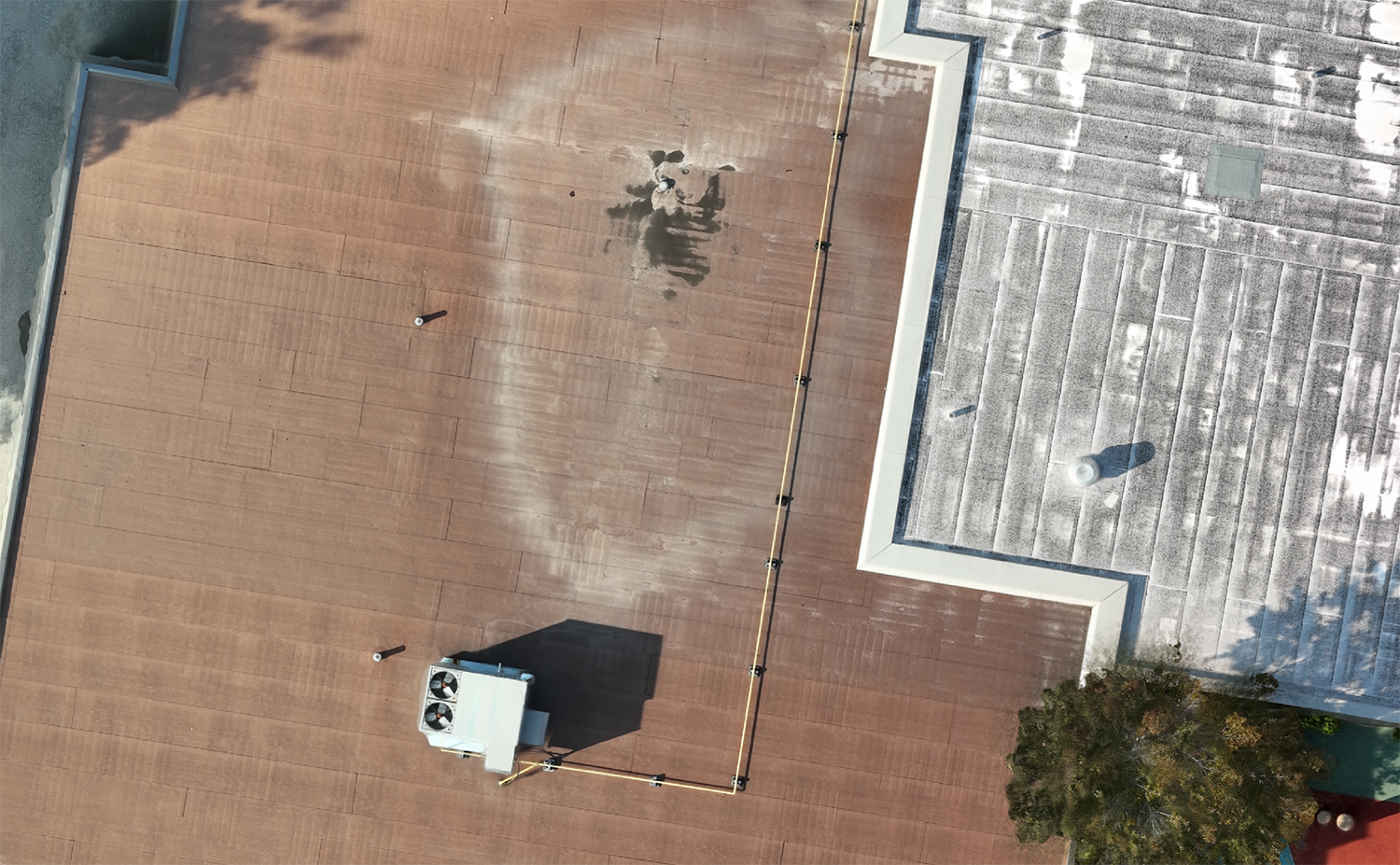
RGB Roof Survey: During daylight hours, our team will fly the roof with our drone and RGB payload. These images will be used to create the RGB roof map, which will be compared with the infrared roof scan to analyze both visual and thermal roof conditions. This high resolution RGB map will help to find dirt buildup, standing water, debris and other roof conditions, to enhance the inspection.

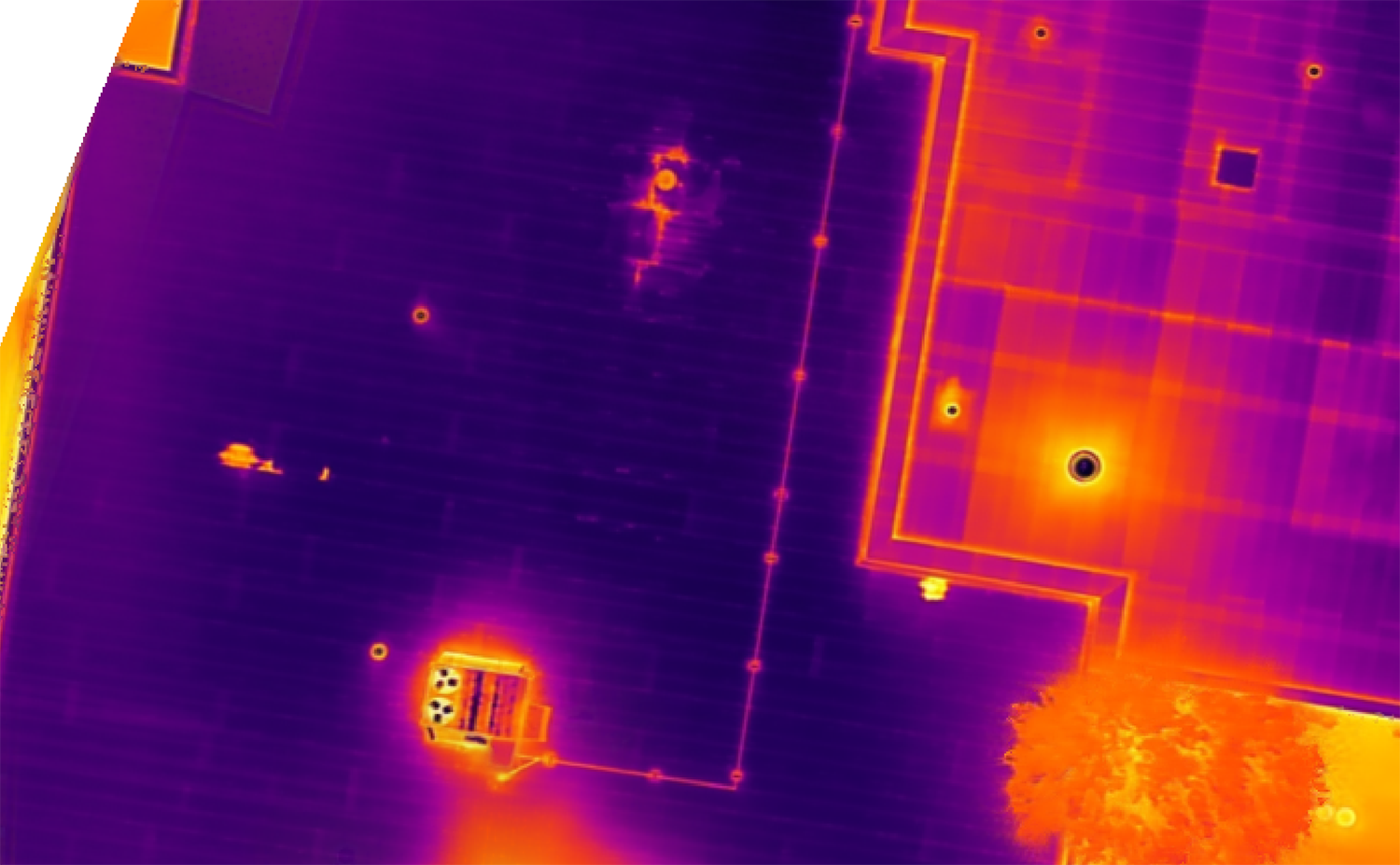
Thermographic Roof Survey: About an hour after sunset, our team will start the thermal imaging scan using our drone with infrared (IR) payload. This takes longer than the RGB survey as the infrared camera has lower resolution and needs to cover the entire roof like the RGB cameras. This will result to thousands of images depending on the size of the roof.

Data Processing & Analysis: Our team processes the RGB and thermal images into georeferenced maps with centimeter level accuracy, then imports into AutoCAD to measure the area of thermal anomalies. We offer radiometric and non radiometric thermal maps for all flat roof types.

Report Generation: We compile our findings into a report with annotated thermal images and area volumes. We also provide AutoCAD .dwg and .pdf files with title blocks and scaled, georeferenced images of the infrared roof scan.

Why Our Infrared Flat Roof Moisture Survey for Wet Insulation?

Precision: Our pilots capture nadir images of the roof, meaning the camera sensor is pointing straight down, perpendicular to the surface. This is more accurate than ground based walk over or elevated IR captures. Infrared roof inspection is most effective when the IR sensor is perpendicular to the roof to detect moisture by observing the temperature difference between wet and dry roofing materials.

Safer: By using non contact aerial infrared roof surveys we eliminate the need for physical access to the roof, reducing risk. Our certified drone pilots ensure safe operation and follow all RPAS regulations during every infrared roof scan.

Cheaper: Ground based infrared scans require manual labor to access different parts of the roof for thermal scanning. Our drone based infrared roof leak detection eliminates the need for roof access during the thermal scan, reducing labor cost and increasing efficiency.

Faster: We can scan commercial roofs of all sizes in one day or evening. For time critical projects we can deploy multiple teams and drones to finish on time. This is to prevent radiational cooling effects that may affect wet insulation detection. We want to provide thorough and accurate roof moisture scan and deliver results fast.

< SLIDE ME >

Comparison Slider - RGB and Infrared Flat Roof Maps

How Thermal Imaging Cameras Work

Thermal imaging cameras capture infrared radiation, a part of the electromagnetic spectrum that is not visible to humans. They work by detecting the heat radiated by an object, then converts it into a visible image. The camera’s heat readings are not blocked by solid objects like walls or roof membranes, so you can accurately detect temperature differences. Thermal cameras produce black and white images but our thermographers use software to add colors to the images to make the temperature differences more visible. We add colors to the images to easily identify areas of concern on the roof surface like wet insulation or thermal anomalies, making thermal imaging a powerful tool in roof inspections.

Before The Infrared Drone Roof Inspection

Before we conduct an infrared roof inspection the roof surface should be dry and free of debris to get accurate readings. The inspection is usually done in the evening when the roof is cooling down which helps to identify temperature anomalies. We don’t recommend scanning after a recent rain or when the dew point is reached as this can make it hard to distinguish between internal condensation and external moisture. A certified infrared professional will determine the best time to do the scan and ensure the images are interpreted correctly. Proper preparation is key to get reliable thermal scans that reflects the condition of the roof assembly.

Infrared Drone Roof Inspection

During the inspection a thermal camera is used to scan the roof surface, detecting temperature differences and creating a thermal image. The camera can be used from various angles, on the roof, from elevated position or from an aircraft or drone. The thermal image will show areas of concern like moisture accumulation, insulation deficiencies and other hidden problems. The inspection can be done on commercial low slope (flat) roofs but may not be suitable for all roofing materials. By capturing thermal images we can get a clear picture of the roof’s condition and target maintenance and repairs.

Image Analysis

After the thermal images are produced a professional will analyze the images to look for patterns that indicate moisture intrusion, insulation defects and other issues. The analysis will help property owners understand the condition of their roof and identify areas of concern. The thermal images will show warm spots which are areas of moisture accumulation and cool spots which are areas of dry insulation. The images can be used to create a detailed report of the findings and recommendations for repairs or maintenance. This thorough analysis will give property owners a clear understanding of their roof system’s condition and can take proactive action to address the issues.

Who Benefits from Infrared Drone Roof Inspections?

Commercial Property Owners:

Keep your commercial flat roof intact with regular thermal imaging roof inspections. Our thermal roof inspection services help you catch moisture issues before they become costly repairs.

Facility Managers:

Stay ahead of maintenance issues and protect your assets with our infrared roof moisture scans. We give you the data to plan and execute repairs and preserve the value and safety of your facilities.

Roofing Contractors:

Use our infrared roof surveys to assess flat roofs before and after installation or repair projects. Our thermal roof inspections will give you a clear view of the moisture issues so your work is thorough and effective.

Commercial Roof Consultants:

Add our infrared roof scans to your services. Give your clients detailed reports and actionable data for flat roofs so they can make informed decisions and maintain their assets.

FAQ’s

  • Infrared roof inspection uses thermal imaging cameras to detect temperature differences across your roof surface. Here's how it works: During the day, the sun heats your roof, and moisture trapped in the insulation retains that heat longer than dry areas. After sunset, we fly our drone-mounted infrared camera over your roof when it's cooling down. Wet insulation stays warmer and shows up as "hot spots" on the thermal image, while dry areas cool faster and appear cooler. Our Level 2 certified thermographers capture thousands of thermal images and process them into detailed georeferenced maps, allowing us to pinpoint exactly where moisture has accumulated beneath your roof membrane—all without physically touching or damaging your roof.

  • The cost of an infrared roof inspection depends on several factors including roof size, complexity, accessibility, location, and the level of detail required in your deliverables. Larger roofs require more flight time and data processing, while multiple buildings or complex roof geometries add to the scope. Our comprehensive service includes both RGB and infrared drone surveys conducted at optimal times, professional data processing by Level 2 certified thermographers, georeferenced thermal maps with centimeter-level accuracy, AutoCAD drawings showing precise anomaly areas, and a detailed technical report. Many of our clients find that the investment in infrared inspection pays for itself by identifying specific problem areas for targeted repairs rather than replacing an entire roof. We provide custom quotes based on your specific project requirements. Contact us with your roof size, location, and project goals for an accurate estimate tailored to your needs.

  • A complete infrared roof survey typically takes 4-6 hours from start to finish, though the timeline depends on roof size. We conduct two separate flights: an RGB (visual) survey during daylight hours that takes 30-60 minutes, and the thermal imaging survey about an hour after sunset that can take 1-3 hours depending on roof size. The infrared survey takes longer because thermal cameras have lower resolution and require more overlapping images for accuracy. After the flights, our team processes the data into high-resolution maps and reports, which typically takes 5-7 business days. For time-critical projects or very large facilities, we can deploy multiple drone teams to complete the scan in a single evening, ensuring consistent thermal conditions across the entire roof.

  • ASTM C1153 is the "Standard Practice for Location of Wet Insulation in Roofing Systems Using Infrared Imaging." It's the industry standard that defines the proper methodology for conducting infrared roof moisture surveys. ASTM 1153 specifies that thermal scans should be performed when there's a sufficient temperature differential between the roof surface and interior (typically at least 20°F), usually in the evening after sunset when the roof is radiating stored heat. The standard requires clear skies, dry roof conditions, and no recent precipitation. Our ASTM 1153-compliant surveys follow these protocols exactly: we capture both RGB and infrared imagery, document weather conditions, and ensure our infrared camera is positioned perpendicular (nadir) to the roof surface for maximum accuracy. This standardized approach ensures reliable, defensible results that roofing consultants and insurance companies recognize and accept.

  • Infrared thermography is excellent for detecting moisture in roof insulation, but it's not a leak detector in the traditional sense. Here's what it can and can't do: Infrared detects areas where insulation has absorbed moisture over time, which often indicates a leak has occurred. However, it cannot detect brand new leaks that haven't yet saturated the insulation, pinhole leaks that haven't spread moisture laterally, or leaks in roofs without insulation beneath the membrane. Additionally, infrared cannot see through ponding water, metal decking, or certain roof coatings. That's why we always conduct a complementary RGB visual survey to identify obvious issues like damaged membranes, standing water, or debris accumulation. The most effective roof assessment combines infrared thermography with visual inspection and, when necessary, destructive testing like core samples to verify findings. Our reports clearly identify thermal anomalies and recommend follow-up verification when needed.

  • The ideal time for an infrared roof inspection is during stable weather conditions with a temperature differential of at least 20°F between the roof interior and exterior. In Ontario, the best seasons are late spring through early fall when we have longer daylight hours and warmer temperatures. The actual thermal scan must be conducted in the evening, typically starting 1-2 hours after sunset, when the roof is cooling down and releasing stored heat. This is when wet insulation retains heat longer than dry areas, creating the thermal contrast we need for accurate detection. We avoid scanning after recent rain (wait at least 24-48 hours), during high humidity when dew forms, or in windy conditions above 20 mph that affect thermal readings. We also need clear skies—cloud cover and precipitation interfere with thermal imaging. Our team monitors weather forecasts closely and always schedules a backup date. The worst time for thermal roof inspection? Winter, when temperature differentials are insufficient and roof access is hazardous.

Get in touch.