

How ASTM C1153 Guides Our Infrared Roof Surveys
On This Page
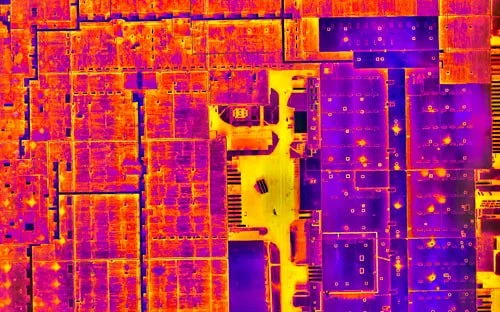
Drone Roof Inspection Using DJI Mavic 3 Enterprise Thermal
When we tell clients our thermal roof surveys follow ASTM C1153 protocols, we sometimes get a follow-up question: what does that actually mean?
ASTM C1153 is the industry standard for locating wet insulation in roofing systems using infrared imaging. Published by ASTM International and regularly updated since 1990, it defines the conditions, equipment, and methodology required to produce reliable results. Roofing consultants, engineers, and insurance companies recognize surveys conducted to this standard because it removes guesswork from the process.
Here's how the standard shapes the work we do for clients across Southern Ontario, from commercial buildings in Toronto and Mississauga to industrial facilities in Hamilton and Vaughan.
Weather Requirements: Why We're Picky About Scheduling
ASTM C1153 specifies strict environmental conditions for thermal scanning. The standard requires:
No appreciable precipitation for at least 24 hours before the survey
Wind speeds below 25 km/h during scanning
A roof surface free of ponded water, snow, ice, and debris
Surveys conducted from one hour after sunset until sunrise
Based on our experience with Ontario weather patterns, we typically schedule with a minimum 48-hour dry window when possible and look for a sunny day before the scan to maximize solar loading. These are practical adaptations, not guarantees as weather can change, and we schedule backup dates for every project
This means the roof absorbs heat during the day, then releases it unevenly at night based on moisture content. Wet insulation holds that heat longer than dry material, creating the temperature differences our cameras detect.
We also require clear evening skies. Cloud cover reduces both daytime heating and nighttime radiational cooling, which weakens the thermal contrast we need to identify anomalies. Every project includes a scheduled backup date in case weather conditions change.
Why Timing Matters: The Science Behind Evening Scans
The standard explains why nighttime scanning works. During a sunny day, all areas of a roof absorb solar energy. But wet insulation has a higher heat storage capacity than dry insulation. After sunset, the entire roof begins cooling, but areas with trapped moisture cool more slowly.
This creates a window, typically starting about an hour after sunset, when wet areas appear noticeably warmer than surrounding dry areas. Our thermal cameras detect these temperature differences and we map them across the entire roof surface.
The standard notes that this effect increases with more sun exposure, which is why summer scans after hot sunny days often produce the clearest results. Winter scans can still work when there's a significant temperature difference between the heated interior and cold exterior, but solar loading remains the primary driver of contrast.

Flat Roof RGB and Thermal Roof Maps From A Drone Roof Inspection
Equipment Standards: Not All Thermal Cameras Are Equal
ASTM C1153 sets specific requirements for infrared imaging equipment:
Spectral range between 2 and 14 micrometers
Minimum Resolvable Temperature Difference (MRTD) of 0.3°C at 20°C
For aerial surveys, the ability to detect anomalies as small as 12cm.
The standard explicitly states that spot radiometers and non-imaging line scanners are not sufficient. You need a true thermal imaging system that creates a two-dimensional temperature map.
Our DJI Matrice 400 with H30T payload meets these specifications, with a 1280×1024 radiometric thermal sensor operating in the 8-14 micrometer range. More importantly, we capture radiometric data, meaning each pixel contains actual calibrated temperature information rather than just relative color values. This allows for more detailed temperature data and produces deliverables that hold up to technical scrutiny.
Need an ASTM C1153 compliant infrared roof survey?
We've built our entire inspection workflow around this standard, from the DJI Matrice 400 with H30T payload to the weather windows we wait for and the AutoCAD deliverables we produce. See exactly what's included in our process, equipment, and deliverables.
View Our Infrared Roof Inspection Service →2026 Equipment Update
Our thermal inspection capabilities expanded in late 2025 with the addition of the DJI Matrice 400 paired with the H30T payload. This system offers:
Higher thermal resolution with the 1280×1024 radiometric sensor, capturing finer temperature gradients across the roof surface
Integrated laser rangefinder for precise distance measurements during inspection
Longer flight times compared to previous platforms, reducing the number of battery swaps on larger facilities
The real benefit isn't just efficiency (though we're seeing roughly 30% improvement on typical commercial inspections). It's the level of detail we can now capture. The higher resolution sensor picks up smaller anomalies and produces cleaner thermal orthomosaics, which means more confidence in the findings we report.
Aerial vs. Ground-Based: What the Standard Says
ASTM C1153 covers both ground-based walk-over surveys and aerial surveys. Each has different requirements.
Ground-based walk-over surveys require the operator to maneuver across the roof with a handheld or cart-mounted camera. The standard specifies a maximum viewing distance of 5 meters and requires imaging at angles greater than 20 degrees from the roof surface.
Aerial surveys, which is what we perform, capture thermograms for the entire roof from above. The standard requires that findings be viewed on a monitor during the flight to ensure proper coverage, and that the data be recorded for detailed analysis afterward.
The key advantage of aerial scanning is the perpendicular viewing angle. When you capture thermal data straight down (what we call nadir imaging), you get more accurate temperature readings than angled ground-based scans. You also get complete, systematic coverage rather than sampled areas.
Verification: Why Core Samples Still Matter
One thing ASTM C1153 makes clear: infrared data alone is not definitive. The standard requires verification through invasive testing, specifically core samples that cut through the membrane and insulation to confirm moisture content.
This is important context for clients. A thermal scan identifies areas of probable moisture intrusion based on temperature patterns. But thermal anomalies can also be caused by variations in insulation thickness, changes in roof construction, HVAC equipment, or other factors. Core samples confirm whether an anomaly actually contains wet insulation.
Verification cores are advisable for any project where significant repair decisions will be made based on the findings.. The thermal scan tells you where to look. The core samples tell you what you found.
What Goes in the Report
ASTM C1153 specifies minimum reporting requirements including:
Building identification, location, and use
Weather conditions at the time of survey and during the previous 48 hours
Date and time of the survey
Equipment used, including spectral range
Roof surface conditions
A scaled drawing showing size and location of potential wet areas
Our deliverables include all of this plus georeferenced orthomosaic maps (both RGB and thermal), AutoCAD drawings with measured anomaly boundaries and square footage calculations, and the complete raw image sets from both surveys.
The Bottom Line
ASTM C1153 exists because thermal roof scanning, done properly, is a reliable method for locating trapped moisture. Done improperly, without the right conditions, equipment, or methodology, it produces results that can't be trusted.
When we say our surveys follow ASTM C1153 protocols, we mean we've built our entire process around this methodology, from scheduling and equipment to data collection and reporting.. The weather windows we wait for, the equipment we invest in, the flight patterns we follow, and the deliverables we produce all trace back to this standard.
For property owners and facility managers, this means the data you receive is captured under controlled conditions per the standard's requirements. For roofing consultants and engineers, it means documentation produced according to the standard's methodology requirements.
Need an infrared roof survey conducted to ASTM C1153 protocols?
We've built our entire inspection workflow around this standard, from the DJI Matrice 400 with H30T payload to the weather windows we wait for and the AutoCAD deliverables we produce. See exactly what's included in our process, equipment, and deliverables.